Our guide to selecting the best customer review management platform in 8 key questions. Take control of your online reputation effectively.
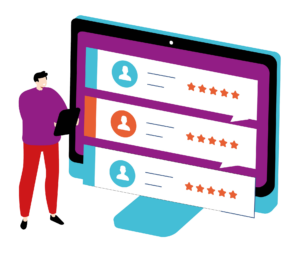
A customer review management tool helps you take control of your online reputation efficiently. Through automation, response generation support, sentiment analysis, and omnichannel capabilities, you handle customer feedback with greater effectiveness and professionalism. A customer review management platform also enables you to respond with less emotion and more detachment. You stay composed when facing negative reviews and maintain a consistent brand image across all platforms.
Customer reviews are a goldmine for your customer service. They help identify recurring issues, resolve incidents, and build customer loyalty. According to a study by Channel Engine and E-commerce Nation, 75% of consumers say reviews directly influence their purchasing decisions. Responding to customer reviews strengthens trust with future customers and reassures prospects, even when dealing with negative feedback. That is, as long as you provide a constructive and professional response that enhances the customer experience.
Omnichannel functionality is a key feature in customer service management, and by extension, in customer review management. It allows you to centralize reviews from platforms like Trustpilot, Google, Avis Vérifiés, Avis Garantis, the App Store, Google Play, as well as social media and select marketplaces. You can respond to all customer reviews from a single interface. This significant time-saver ensures you never miss a comment and maintain an active presence across all your online channels.
When connected to your CRM, a strong customer review management tool makes it easy to identify your customers. You can quickly view their purchases, visits, or previous interactions with your company. This valuable data helps you reconstruct the context of their visit, identify the product mentioned, and understand the issue if the review is negative. In cases of dissatisfaction, you have all the information needed to follow up with the customer by email or phone and resolve the situation together. If your review management tool is integrated with your messaging system, the exchange becomes even smoother. Your customer relationships flow more naturally, and your customers leave more satisfied.
Consistency in messaging with your brand identity is crucial when automatically generating responses, as it ensures a uniform customer experience. Your communications maintain your company’s voice and deliver the same level of satisfaction across all channels. A high-performing customer review management platform generates responses tailored to the specifics of each review while staying true to your brand’s tone. For international brands, the tool must also understand and respond in the customer’s language. To avoid a "copy-paste" effect, messages vary from one review to another while remaining polished. Another useful feature to look for is response generation based on instructions. A single sentence is all it takes for your tool to automatically craft the desired message, highlighting key elements that reflect your brand’s identity. With the right tool, responses no longer feel impersonal: they incorporate your brand’s codes to ensure continuity in customer support.
Automating responses to customer reviews saves significant time in managing your online reputation. However, our advice: don’t automate all your responses! While it may be tempting to automate everything to optimize your time, this approach can harm your brand image. Automation works well for positive reviews or those without text. But negative reviews require special attention. Prioritize empathetic responses that offer concrete solutions to the customer. This approach turns a negative experience into a loyalty-building opportunity and strengthens consumer trust.
Your customers’ reviews highlight both the strengths and areas for improvement in your business. This makes it easy to identify opportunities to deliver a more satisfying customer experience. If you manage multiple points of sale, escalating a review allows you to notify the relevant location directly so they can investigate. This flow of information creates a continuous improvement loop: local teams are alerted in real time to incidents or issues, can respond quickly, and fix problems before they recur. You optimize customer service management at both the local and global levels.
Since customer reviews are public, a high-performing platform can easily aggregate comments about your competitors. This benchmark gives you a clear view of your market positioning. You see where your business and points of sale stand relative to the competition. This comparative analysis reveals your strengths and areas for improvement compared to other players in the sector. You can leverage your differentiators to attract new customers with a service and communication tailored to consumer expectations.
Data is a critical lever for assessing the real impact of your actions. Opt for a tool that centralizes your reviews and automatically generates clear performance indicators. This way, you can track customer satisfaction trends, measure the effectiveness of improvements, and analyze how your brand is perceived over time. This data-driven approach allows you to continuously refine your strategy, enhance the customer experience, and strengthen your online reputation in the long run.
Knowing which AI model a customer review management platform uses is essential. Even better? Being able to choose it yourself. You can select an AI model that meets your company’s security requirements, digital sovereignty, and customer data management needs. This flexibility ensures you align with your brand’s values while safeguarding your customers’ sensitive information.
Your customer reviews shape your online reputation. Managing these comments effectively helps retain your existing customers and attract new ones. According to Solike, companies that respond to customer reviews receive more feedback (+12% more reviews published) and see an improvement in their ratings (+0.12 points). Additionally, consumers prefer responsive businesses, with over 80% more conversions. This virtuous cycle generates more customer reviews and draws in new buyers. Your reputation improves through more positive comments and an active presence across different platforms.
A customer review management platform allows you to continuously monitor the quality of your customer service and quickly identify areas for improvement. By flagging negative reviews and analyzing recurring comments, you pinpoint the pain points that detract from your customers’ experience. This proactive approach turns every negative review into an opportunity for improvement. By providing concrete solutions to the issues raised and adjusting your products or services based on customer feedback, you demonstrate your commitment to customer satisfaction. Consumers appreciate companies that listen and evolve based on their input. This responsiveness strengthens customer relationships, enhances the long-term experience, and fosters loyalty among your existing clientele.
Customer reviews reveal what drives purchases and what holds them back. By systematically analyzing these comments, you identify the most effective sales arguments and the recurring objections that hinder conversion. This analysis helps you refine your sales messaging and train your teams on the elements that build trust and drive purchases. You can tailor your communication on your sales platforms to highlight the strengths praised by satisfied customers. Positive reviews become powerful prospecting tools: they reassure hesitant prospects and boost your conversion rate. In fact, companies actively managing customer reviews convert over 80% more visitors. Your online reputation, fueled by these authentic insights, naturally attracts new customers and accelerates your commercial growth.
Managing customer reviews isn’t optional: it’s a strategic lever for retaining your current customers, improving your service, and attracting new consumers. Use these 8 questions as a checklist to select the right tool for your needs or as an evaluation framework for your current platform.