alternance développeur web intelligence artificielle annecy full stack react licence master nodejs dev fAibrik startup informatique développement
According to Matthieu Tranvan’s blog, conversational commerce is gaining significant traction in our society, largely thanks to the rise of chatbots. But what exactly is a chatbot? It’s a digital interface designed primarily to communicate, whether through written messages, voice, or phone calls. There are three types of bots, all considered innovative:
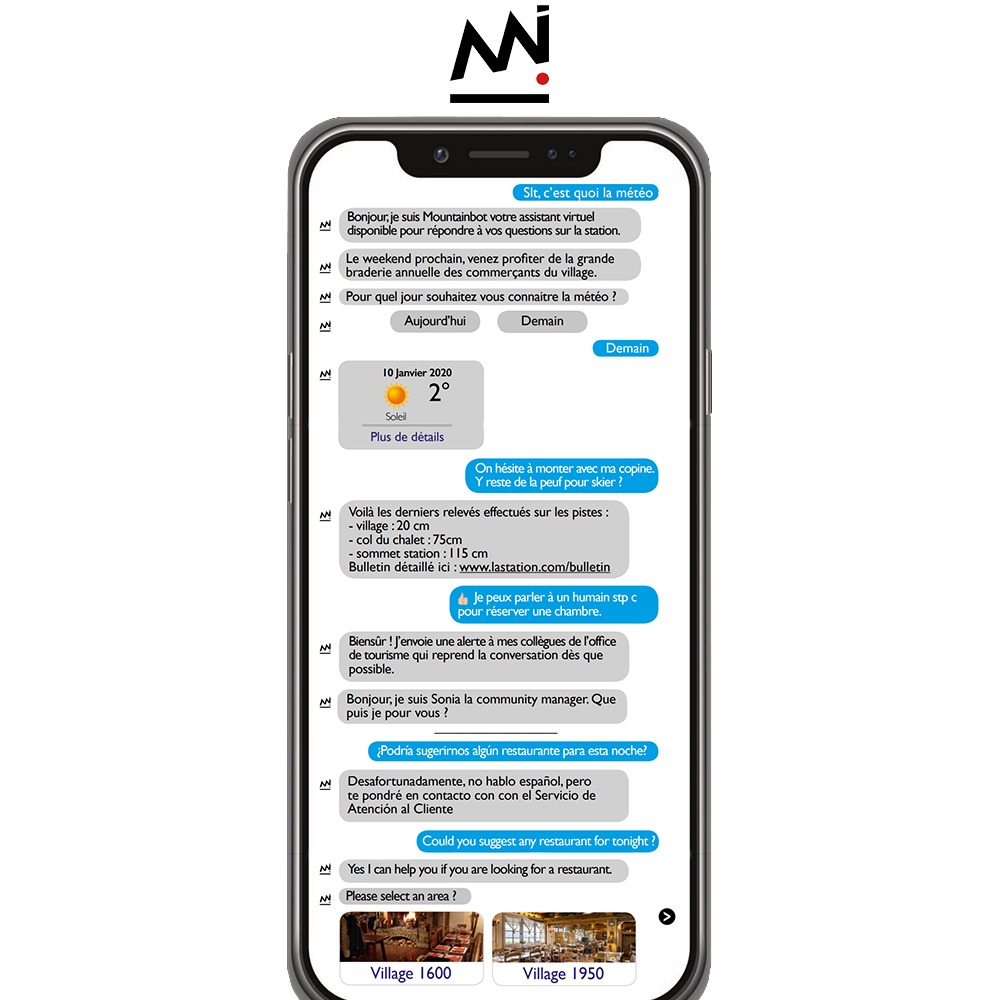
To start a conversation with one of these bots, you simply type a message in an online chat, ask a question aloud (for example, on an iPhone: “Hey Siri, what’s the weather today?”), or call. Chatbots can handle a wide range of consumer requests A bot can provide verbal responses or even interact with third-party applications. Take Google Assistant and the Google Home, for instance: “Okay Google. Play the latest Imagine Dragons track.” The voice assistant will use one of your apps (Deezer, Spotify, Apple Music, etc.) to fulfill the request.
There are two main types of conversational agents:
A chatbot must meet consumer needs For a chatbot to deliver real value, it should have three key qualities:
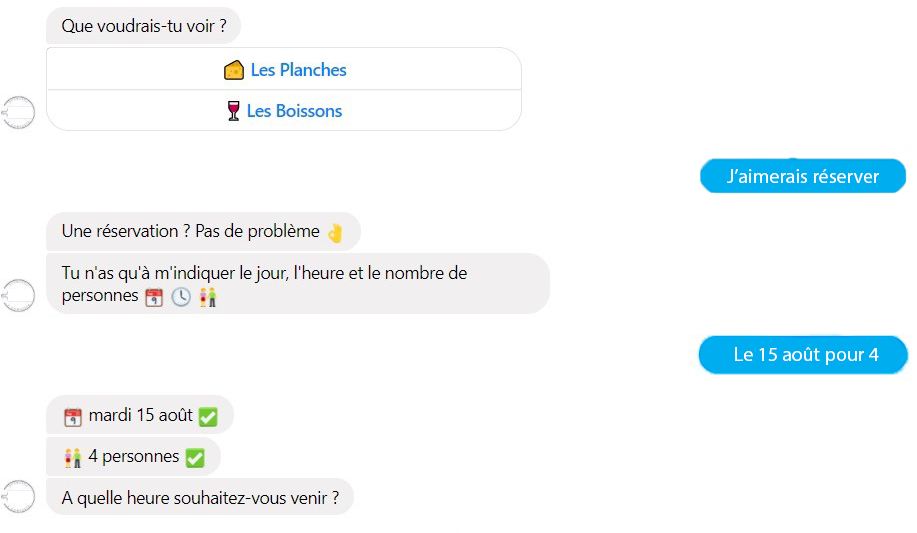
Beyond these qualities, a chatbot should also drive users toward a final action, as shown in the example below: A real economic benefit for businesses adopting chatbots According to JDN and Juniper Research, chatbots will save businesses $11.5 billion globally by 2023. The fact is, 80% of customer questions are repetitive. That’s why chatbots are ideal for:
This means companies won’t need to scale up their community managers or customer service agents. However, human contact shouldn’t be overlooked. Chatbots are there to complement other communication channels. If a bot can’t answer a customer’s question, it hands off to a human agent. Thanks to chatbots, teleoperators can focus on higher-value tasks and save precious time in their work.